
The switch to solar power in Abuja is no longer a luxury, it’s a necessity for reliable, 24/7 power, especially with the unstable grid. But once you have your panels ready, you face the most critical decision that will determine your system’s performance, lifespan, and overall cost: The Battery.
In the Federal Capital Territory, two contenders dominate the market for residential solar storage: Gel Batteries and Lithium-ion Batteries (specifically, Lithium Iron Phosphate or LiFePO4).
Choosing the right one is about balancing your budget, power needs, and long-term goals. Here is a head-to-head comparison, tailored specifically for the Abuja homeowner.
Contender 1: The Reliable Workhorse – Gel Batteries
Gel batteries are a type of VRLA (Valve Regulated Lead Acid) battery. They have been the backbone of inverter and solar systems in Nigeria for decades.
The Good: Why Abuja Homes Choose Gel
- 💰 Lower Upfront Cost: This is the primary reason Gel batteries remain popular. They are significantly cheaper to purchase initially than a comparable Lithium-ion battery. They are an excellent option if you are on a tight budget.
- 🛠️ Mature Technology: Gel technology is proven, simple, and the components are easily sourced and understood by most local technicians in Abuja.
- 🛡️ Safety and Stability: Because the electrolyte is a non-liquid gel, they are spill-proof, produce minimal gas, and have a very low risk of fire or explosion, making them safe for indoor installation with proper ventilation.
- 🌡️ Temperature Tolerance: Gel batteries have a good resilience to the high ambient temperatures experienced in Abuja, provided they are not placed in direct sunlight or unventilated spaces.
The Drawbacks: Where Gel Falls Short
- 📉 Shorter Lifespan & Cycle Life: Gel batteries typically last 3 to 5 years in a heavy-use environment (like a daily cycling solar system in Abuja). They offer fewer charge/discharge cycles (around 500 to 1,500).
- 🔌 Limited Depth of Discharge (DoD): To protect the battery and ensure its 3-5 year lifespan, you should only use about 50% to 70% of its stated capacity. Discharging them fully dramatically shortens their life. This means a 200Ah Gel battery only gives you about 100Ah of usable power.
- 🐢 Slow Charging: The gel electrolyte is sensitive to high current, meaning they charge slowly. Your solar panels and inverter will take much longer to bring them back to full capacity.
- ⚖️ Heavy and Bulky: They require substantial rack space and are very heavy, making installation and future replacement more cumbersome.
Contender 2: The Modern Powerhouse – Lithium-ion (LiFePO4)
When we talk about solar lithium batteries, we are typically referring to Lithium Iron Phosphate (LiFePO4 or LFP). This is the superior, safer version of the batteries used in mobile phones and electric vehicles.
The Good: The Advantage of Choosing Lithium
- 📈 Exceptional Longevity & Cycle Life: Lithium batteries boast a lifespan of 10 to 15 years and offer vastly more charge cycles (typically 4,000 to 6,000+). This is where the long-term value lies.
- 💯 100% Usable Capacity (High DoD): LiFePO4 batteries can be safely discharged to 90% – 100% of their capacity without significant damage. A 200Ah Lithium battery provides nearly 200Ah of usable power.
- 🚀 Fast Charging: They accept a much higher charging current, meaning your solar panels can fully recharge them in a fraction of the time it takes for a Gel battery. This is crucial for cloudy days in Abuja.
- 🧠 Built-in Battery Management System (BMS): Every Lithium battery comes with a smart BMS that constantly monitors voltage, current, and temperature, protecting the battery from overcharging, over-discharging, and overheating. This is key to their long life and safety.
- 🕊️ Lightweight and Compact: They are typically 50% lighter and smaller than Gel batteries of the same usable capacity, requiring less space and simplifying installation.
The Drawbacks: The Barrier to Entry
- 💸 High Initial Cost: The main hurdle. The upfront price of a Lithium-ion system can be 2 to 3 times the cost of a Gel system with the same storage capacity.
- ⚡ Specific Charging Requirements: Lithium batteries must be paired with an inverter and solar charge controller that is specifically programmed to their voltage and current needs. Using an old, poorly configured inverter can damage them.
The Abuja Homeowner’s Decision Matrix
To help you decide, we break down which battery type is best suited for different power profiles common in Abuja:
| Feature | Gel Battery (Lead-Acid) | Lithium-ion (LiFePO4) | The Abuja Verdict |
|---|---|---|---|
| Upfront Cost | Low | High | Gel wins for immediate budget constraints. |
| Total Lifespan | 3 – 5 Years | 10 – 15 Years | Lithium wins for long-term investment. |
| Usable Capacity (DoD) | 50% – 70% | 90% – 100% | Lithium wins—you get all the power you pay for. |
| Charging Speed | Slow | Very Fast | Lithium wins—recharge faster, especially on partly sunny days. |
| Cost Per Cycle | High (due to frequent replacement) | Low (due to long life) | Lithium wins in the long run. |
| Ideal Use Case | Small backup systems, infrequent use, or budget-focused projects. | Daily deep cycling, primary power source, long-term savings. |
🎯 Recommendation 1: The Budget-Conscious Buyer (Backup Power)
If your main goal is to power a few lights, fans, and charge phones during occasional overnight outages, and your budget is the single most important factor, a Gel system is a suitable choice. You get reliable, maintenance-free backup power at the lowest initial cost.
🎯 Recommendation 2: The Reliability Seeker (24/7 Power)
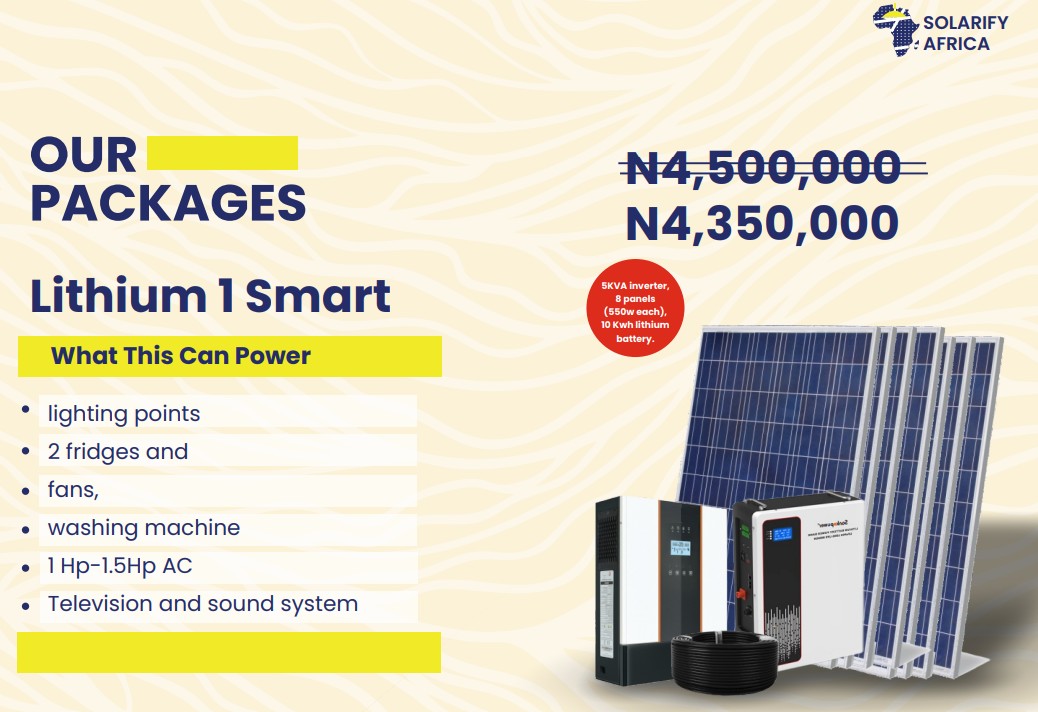
If you are tired of running your generator, want your solar system to be your primary power source, and demand seamless, all-day power for your AC, pumping machine, and entire home, Lithium-ion is the clear winner.
While the upfront cost is higher, the sheer difference in lifespan (10+ years vs. 3-5 years) and usable energy means the total cost of ownership over a decade makes Lithium-ion significantly cheaper and more efficient. You replace one Lithium system instead of potentially three Gel systems.
Final Tip for Abuja: Consider the Heat
Regardless of which battery you choose, the heat in Abuja is your biggest enemy. High temperatures accelerate the degradation of ALL batteries, especially Gel.
- Do not install batteries in direct sunlight, a hot attic, or a small, unventilated closet.
- Ensure the battery compartment or room has excellent airflow and ventilation.
- If using Lithium-ion, the integrated BMS will provide temperature protection, but proper ventilation is still necessary for peak performance.
Making the right battery choice is the most important component of your solar investment. It’s a choice between a lower initial price (Gel) and superior long-term value and peace of mind (Lithium-ion).